
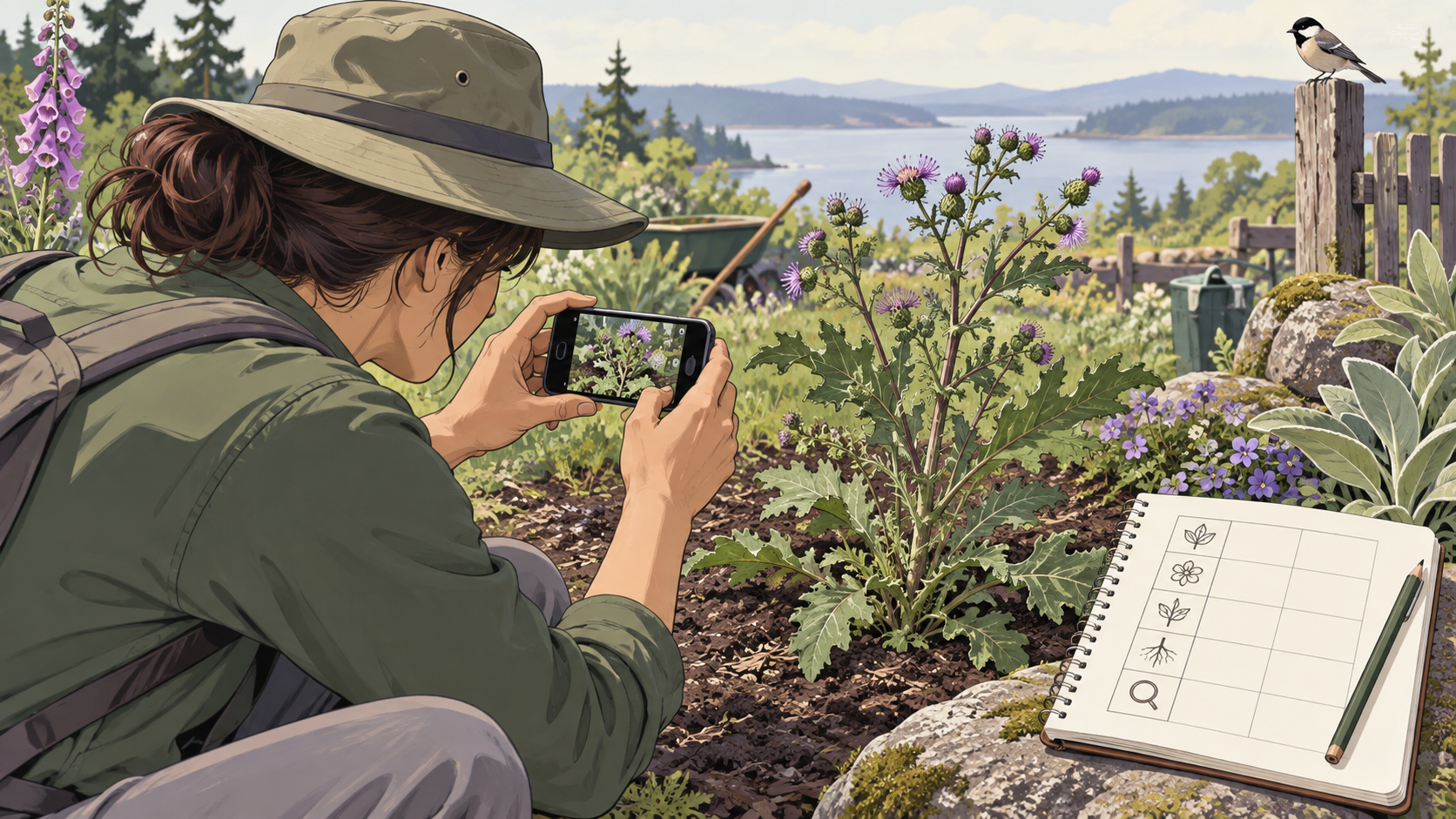
When an unfamiliar plant appears in your yard, begin with identification and a location record. Do not assume that a vigorous plant is a regulated noxious weed or that a photograph from a search result establishes the species.
Kitsap County’s weed-reporting page points readers toward identification resources and the county reporting process. The Noxious Weed Control Program is the appropriate local starting point for questions about regulated weeds.
Record what you can observe without handling it
Note the date, general location, approximate extent, and visible features. Use photographs from a safe position if available. Keep close-ups and wider context views together so the reviewer can understand both the plant and the area.
Avoid touching, tasting, transporting, mowing, or pulling an unidentified plant to complete the record. If it cannot be safely documented, ask the county how to proceed.
Keep identification separate from the work scope
Label the plant as unidentified until an appropriate source resolves it. Ask what current requirements or recommended next steps apply to the confirmed plant and location. A broad article cannot decide which species you have or prescribe a treatment.
If you later request a landscaping quote, provide the confirmed identification and the agency information you received. Ask the contractor to describe the proposed scope, handling and disposal questions, and what follow-up is included.
Save the record for comparison
Keep the original images and any reference number or written response with your project notes. Future observations are easier to compare when the date and location are clear.
This checklist helps you ask a better identification question. It supplies no herbicide instructions and does not establish a property-specific legal duty or a removal method.
Sources checked September 24, 2026.
Related reading: Before Adding Fertilizer, Start with a Soil-Testing Question.